Choosing a preset
A layout starts with a preset: the sheet, the folds and the page order. Here is what each of the eleven families makes, and how to pick the one your object needs.
In the Layout you do not draw an imposition, you choose one. A preset brings the sheet, the folds and the page order; you bring the artworks. Presets come in eleven families, and the family decides what comes off the press: loose prints, a zine, a leaflet, a book.
Each image is the Layout canvas as Shadrum draws it, on a new layout with nothing placed. Three sheets are then filled with artworks separated in Smart CMYK for a Risograph: four inks, so four passes for each printed side.
Three steps in the New layout window.
- In the Library, New layout opens a window with three steps. Imposition shows the eleven families: Planche, Flat, Booklet, Head-to-Tail, Mini-Zine, Fold, Poster, Perfect Bound, Stab, Fukuro-toji and Business Card.
- Format lists the presets of the family. A name such as Booklet A4→A5 (2-up) reads: the sheet you print, then the finished page.
- Details asks for a Name, a Color and, when the preset offers several, the number of Pages; it tells you how many sheets that makes. Then Create.
- The pages can be changed after. The preset cannot: the Layout Imposition panel of an open layout shows it, with no control to swap it.
Every slot says which page it carries.
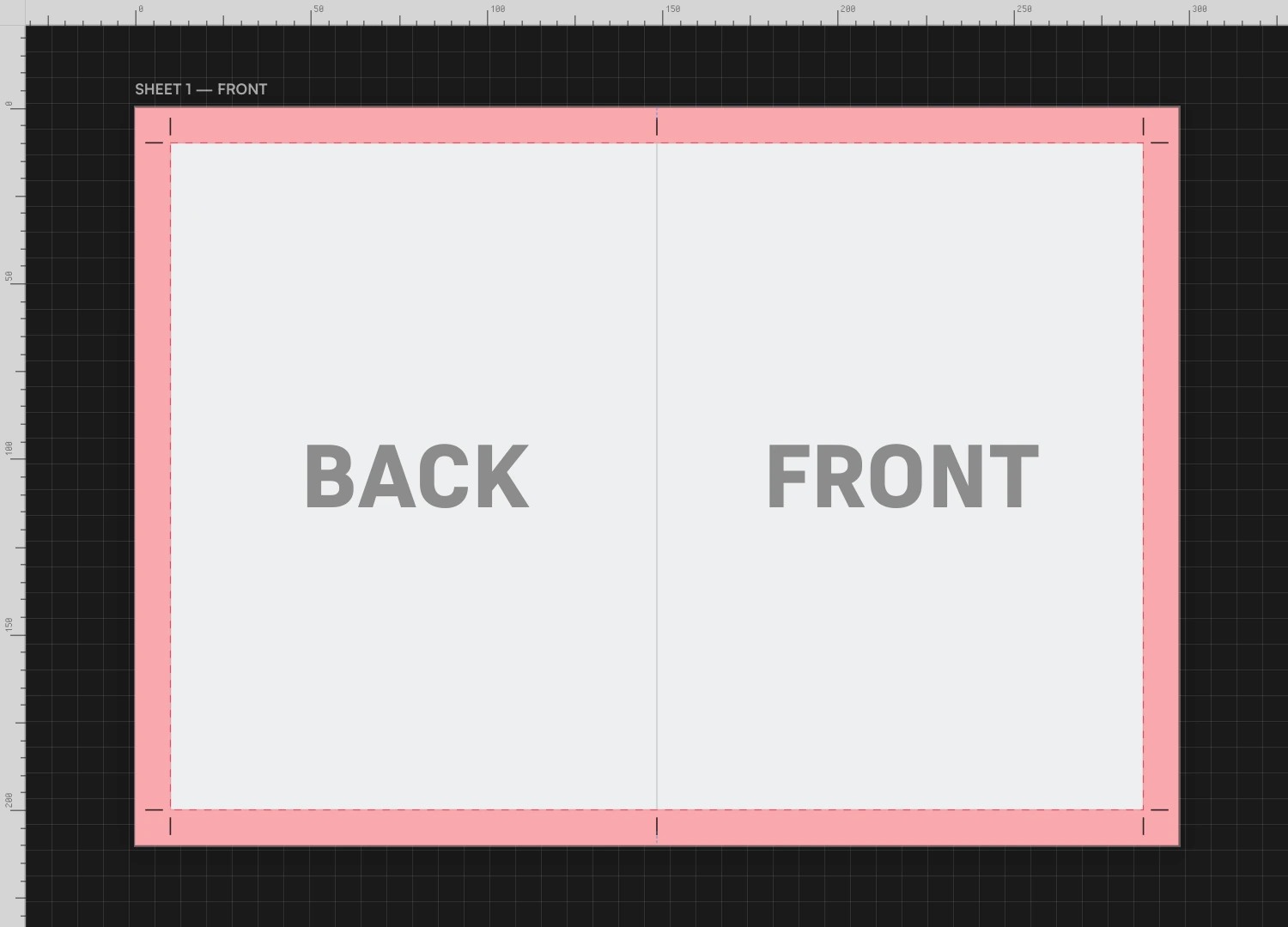
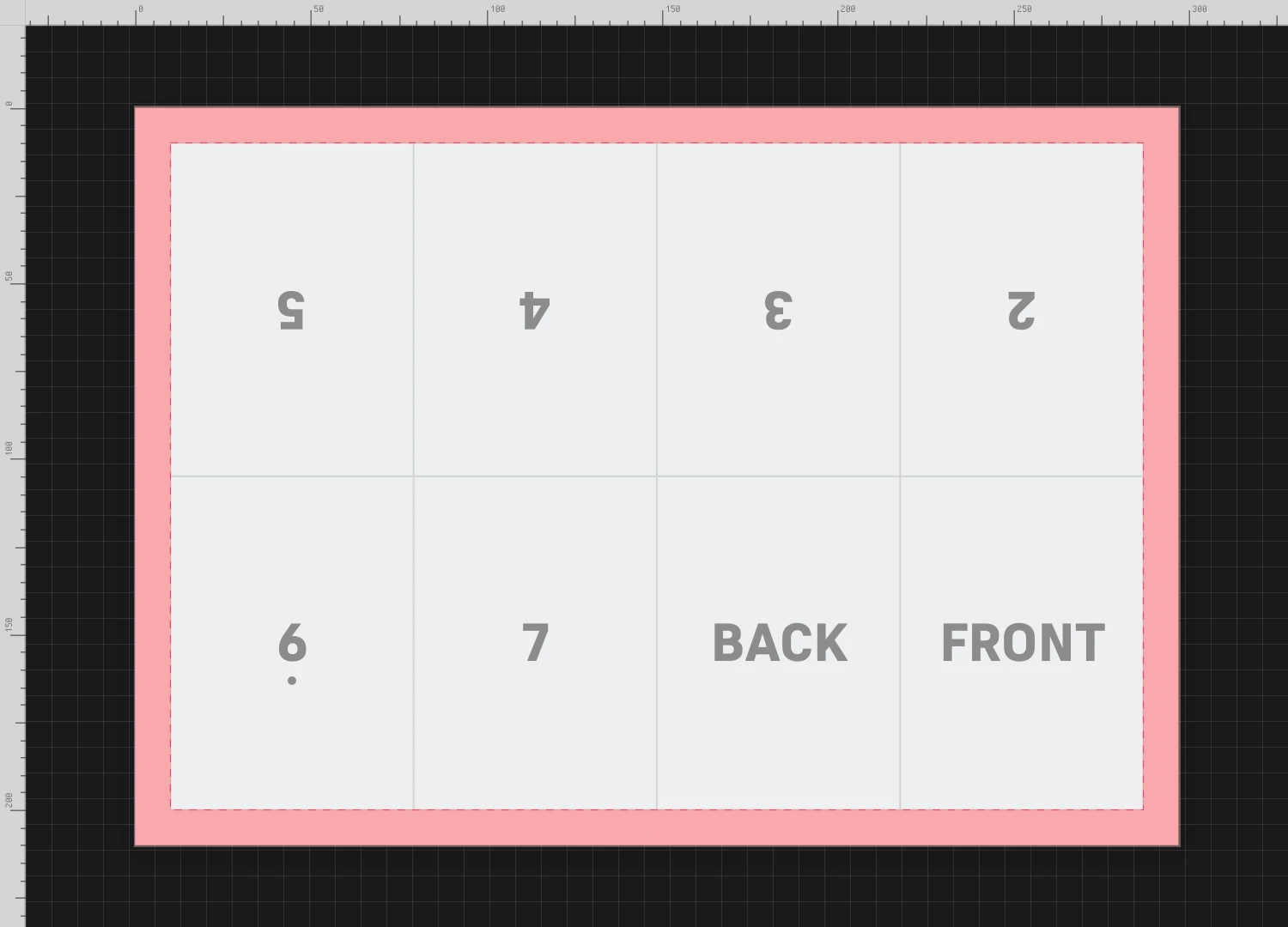
- An empty slot shows its page number, large and pale. FRONT and BACK stand for the first and the last page, the covers. POSTER and MAP, further down, mark slots that are not pages.
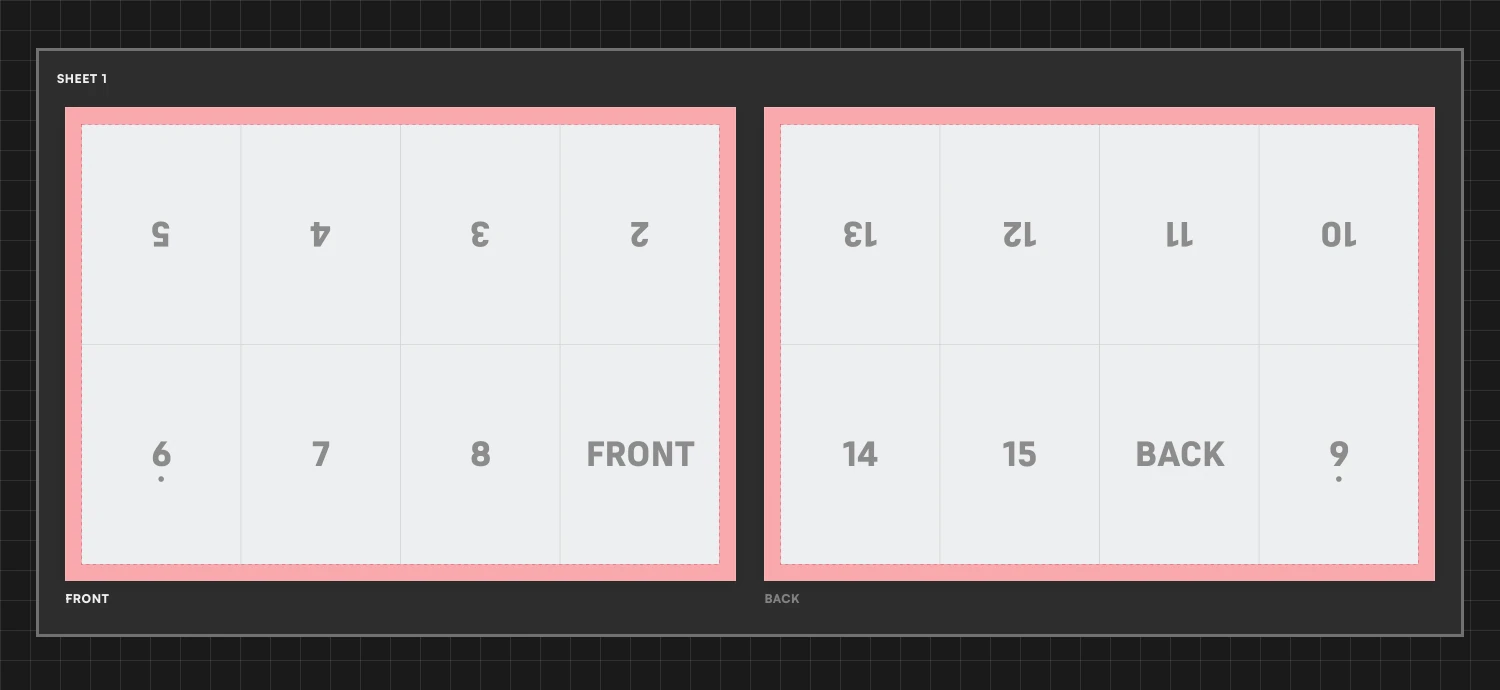
- The label above the sheet names it: Sheet 1 — Front. The solid pink band is the No-Print Area, the edge of the paper the machine cannot print, 10 mm unless you change it.
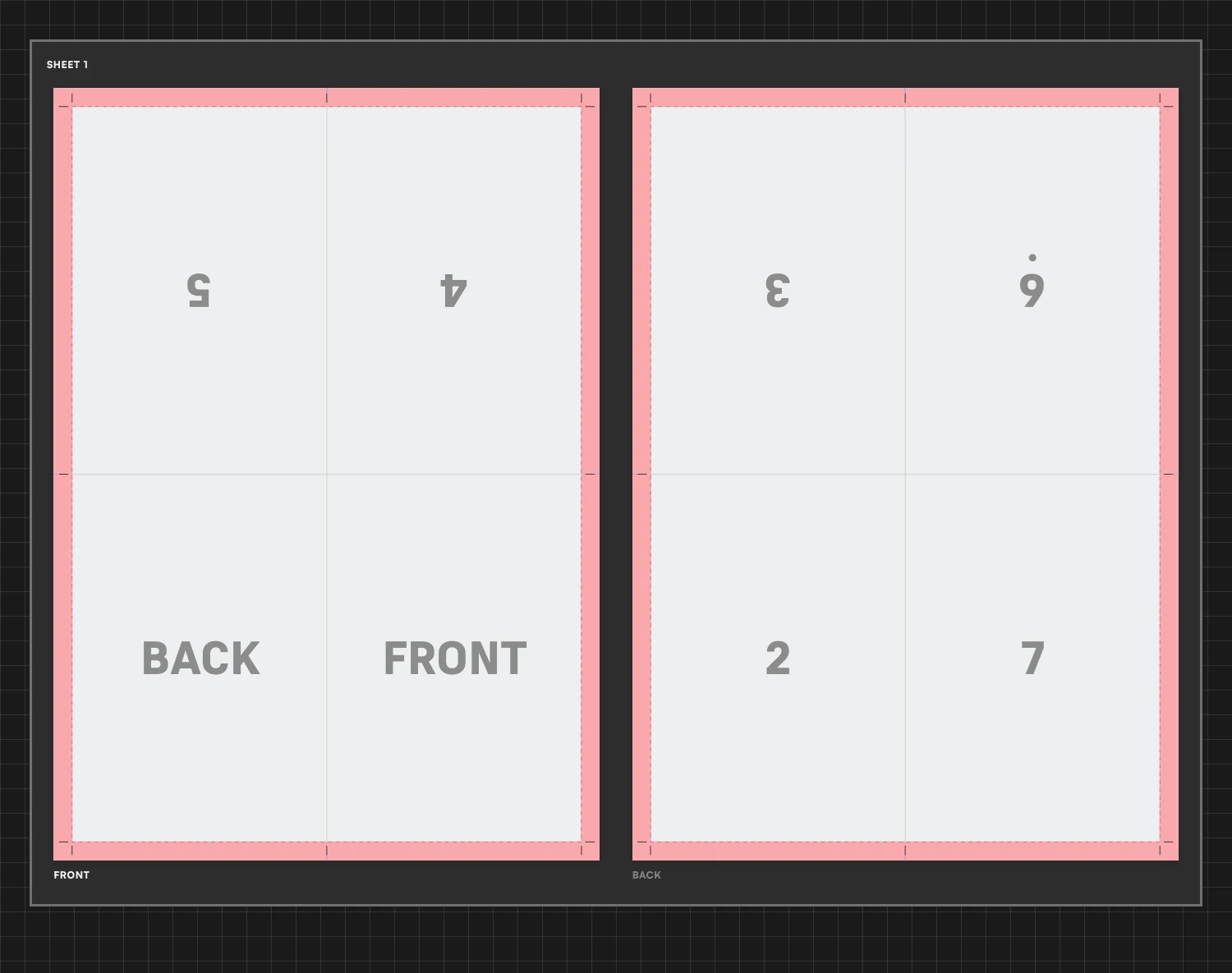
- A number is turned the way its page is imposed. Here the top row prints head down: 5 and 4 on the front, 3 and 6 on the back.
- When a preset turns pages, 6 and 9 get a dot under them: see the 6 at the top right of the back.
- The Grid view shows each sheet as Front and Back side by side, as in most images below.
Planche repeats, Flat lets you place.
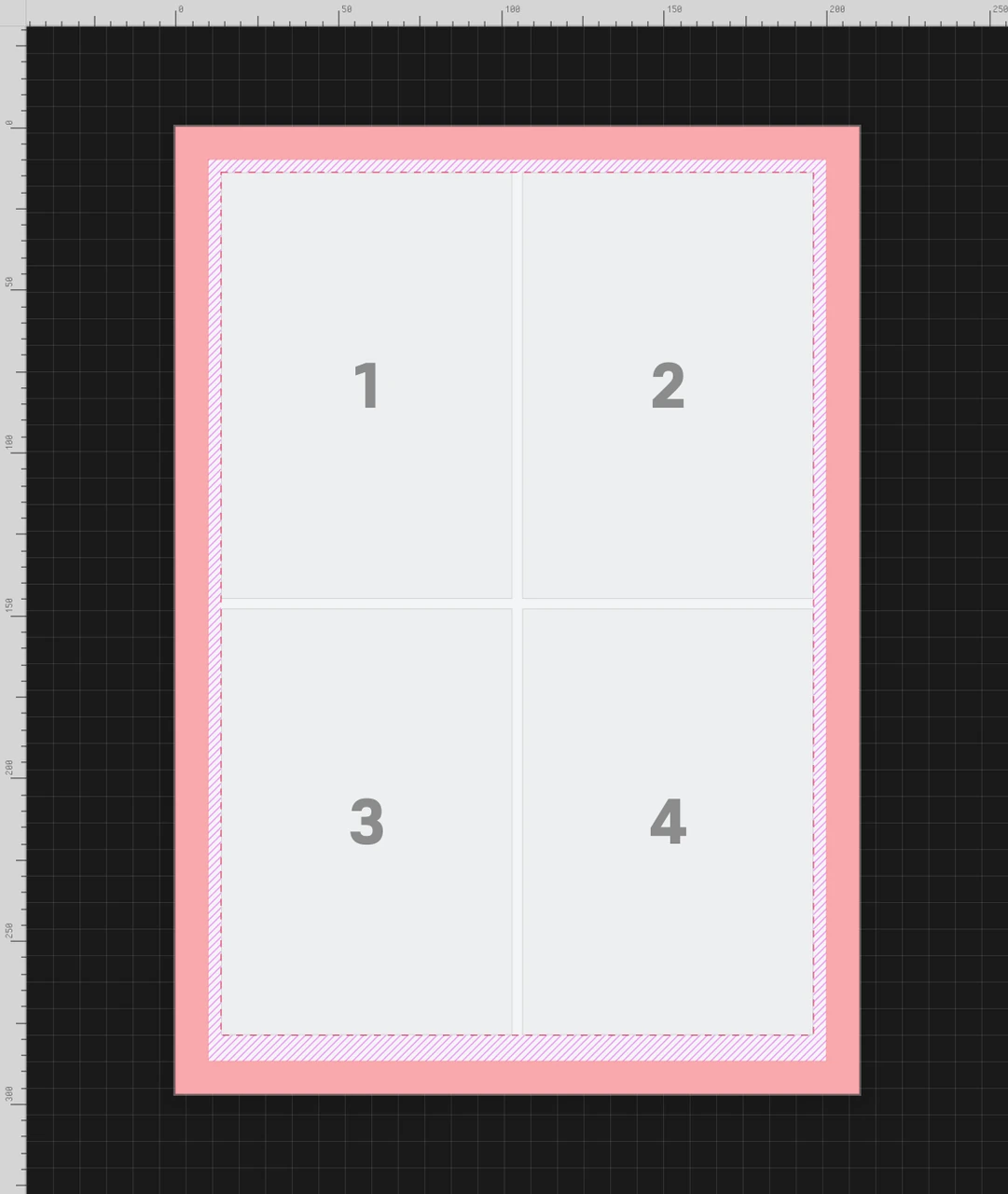
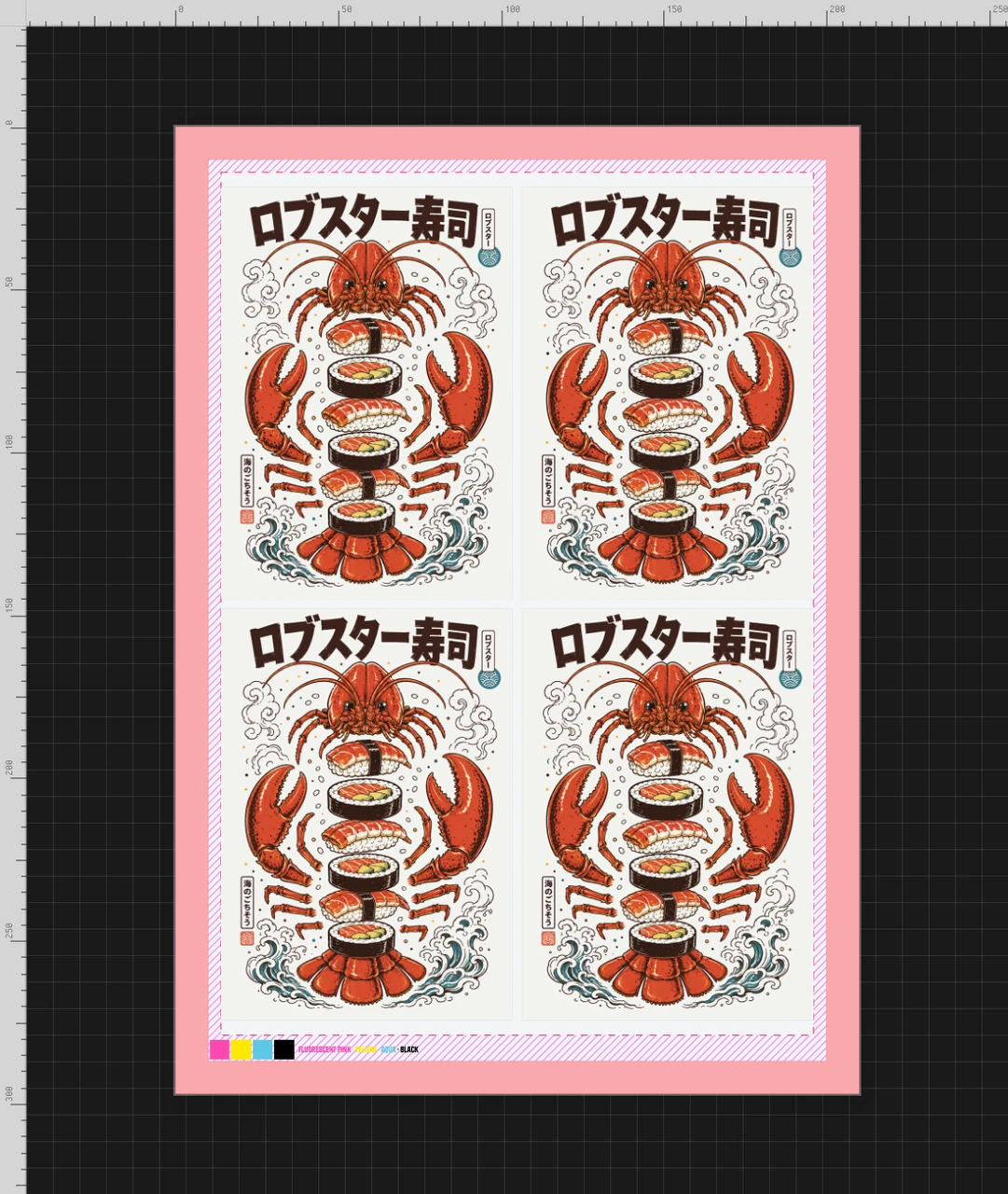
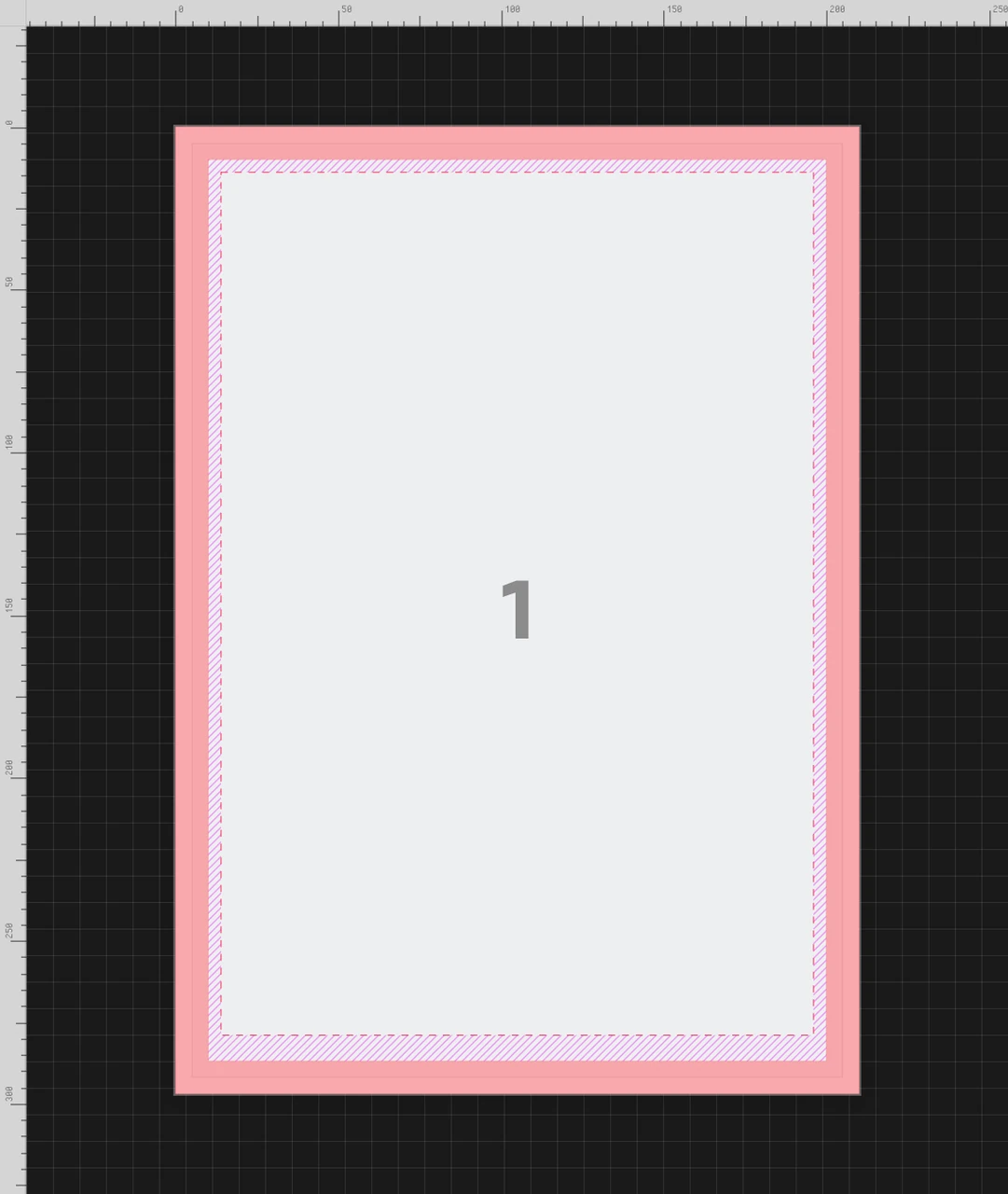
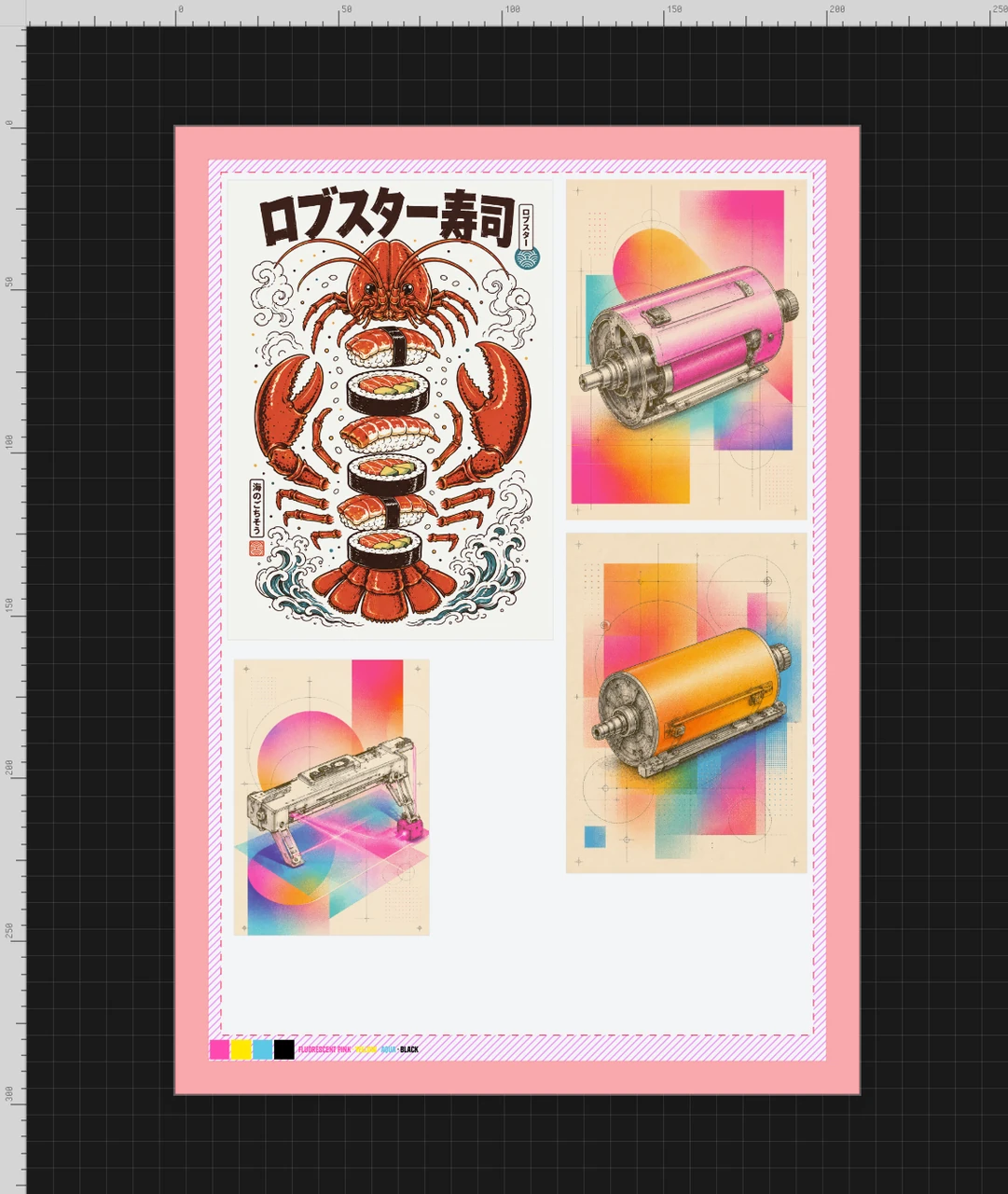
- Planche: drop one artwork and it is repeated in every slot. Postcards, labels, anything you run several-up and cut apart.
- Flat: each artwork you drop opens New slot, which asks for the size of its slot, created where you dropped it. It shares a sheet between different prints.
- Both offer the same sixteen sheets, A6 to A2 with SRA, B and US sizes, and start with one printed side and a label at the foot of the sheet that lists the inks. More in Planche and Flat.
Booklet and Head-to-Tail.
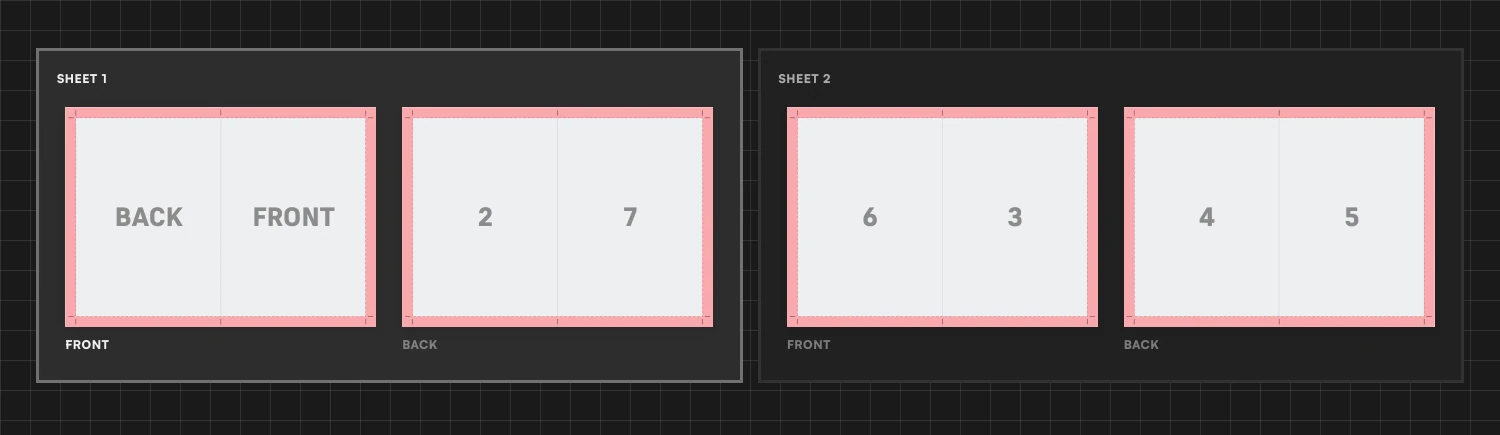
- Booklet makes a saddle-stitched zine: sheets printed on both sides, folded, nested and stapled in the fold.
- A 2-up preset puts two pages on each side: four per sheet, from 4 to 64 pages. A 4-up preset puts four on each side: eight per sheet, from 8 to 64 pages.
- The same eight A5 pages take two A4 sheets here, one A3 sheet in 4-up above. More in Booklets.
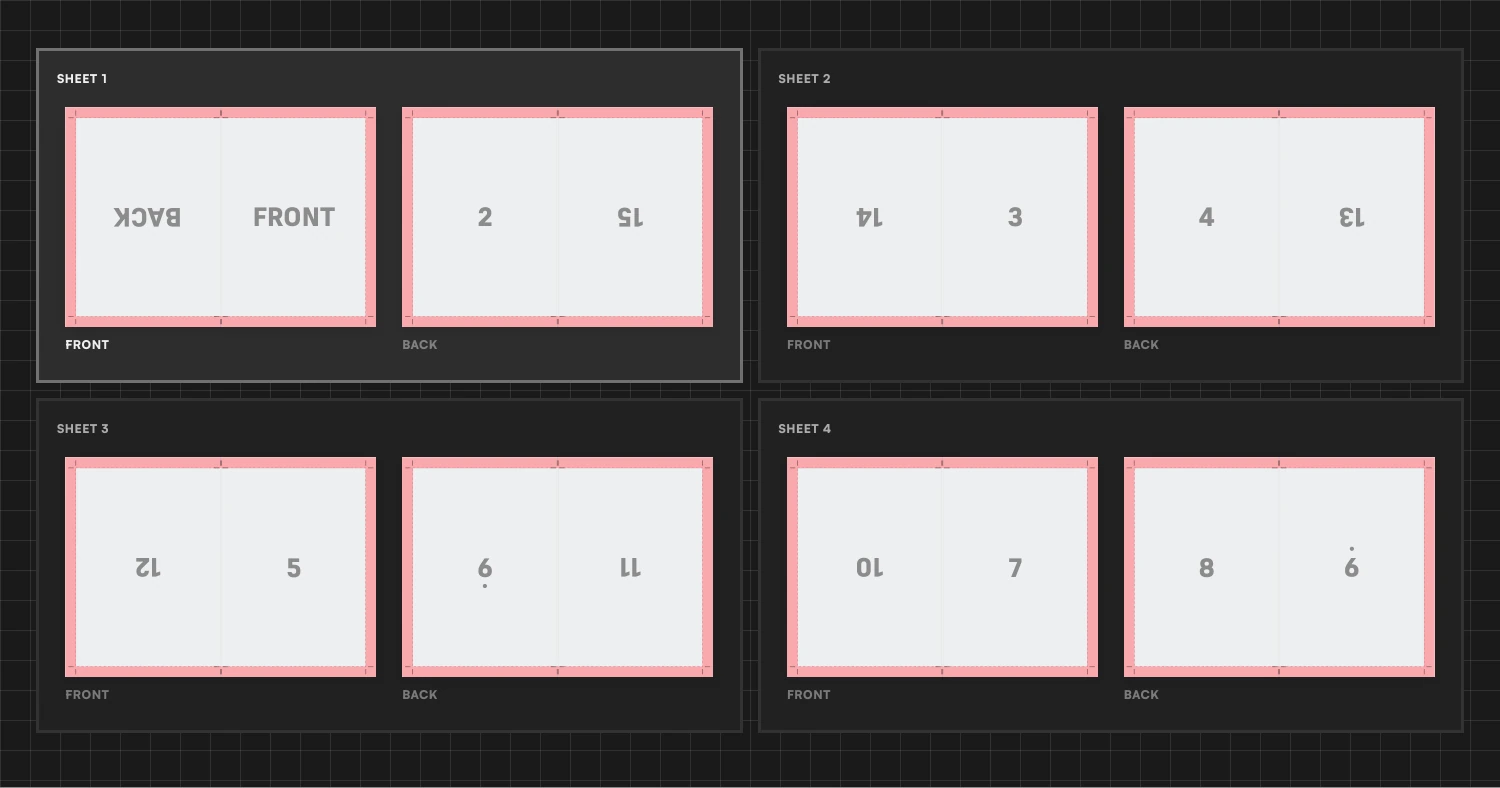
Head-to-Tail is a booklet with two stories of eight pages. Pages 2 to 8 read one way; pages 9 to 15 and the BACK cover are upside down. Turn the zine over, head to tail, and the second story starts from the other cover.
Mini-Zine.
- Mini-Zine holds the zines made from a single sheet, folded and cut, with no binding.
- The eight-page presets print one side only. The top row is head down and the covers sit at the bottom right; the Spread view puts the pages back in reading order.
- The sixteen-page presets print the back as well: still one sheet. More in One-sheet zines.
Fold and Poster.
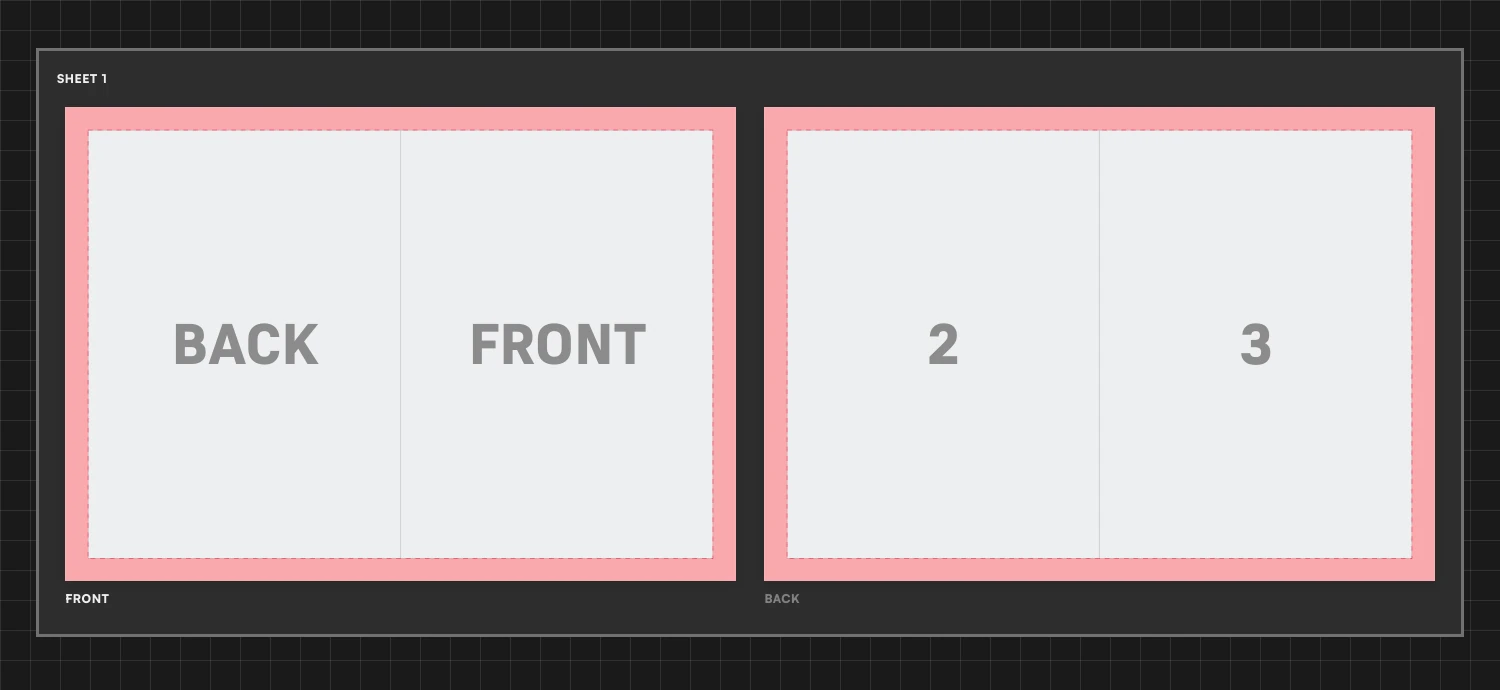
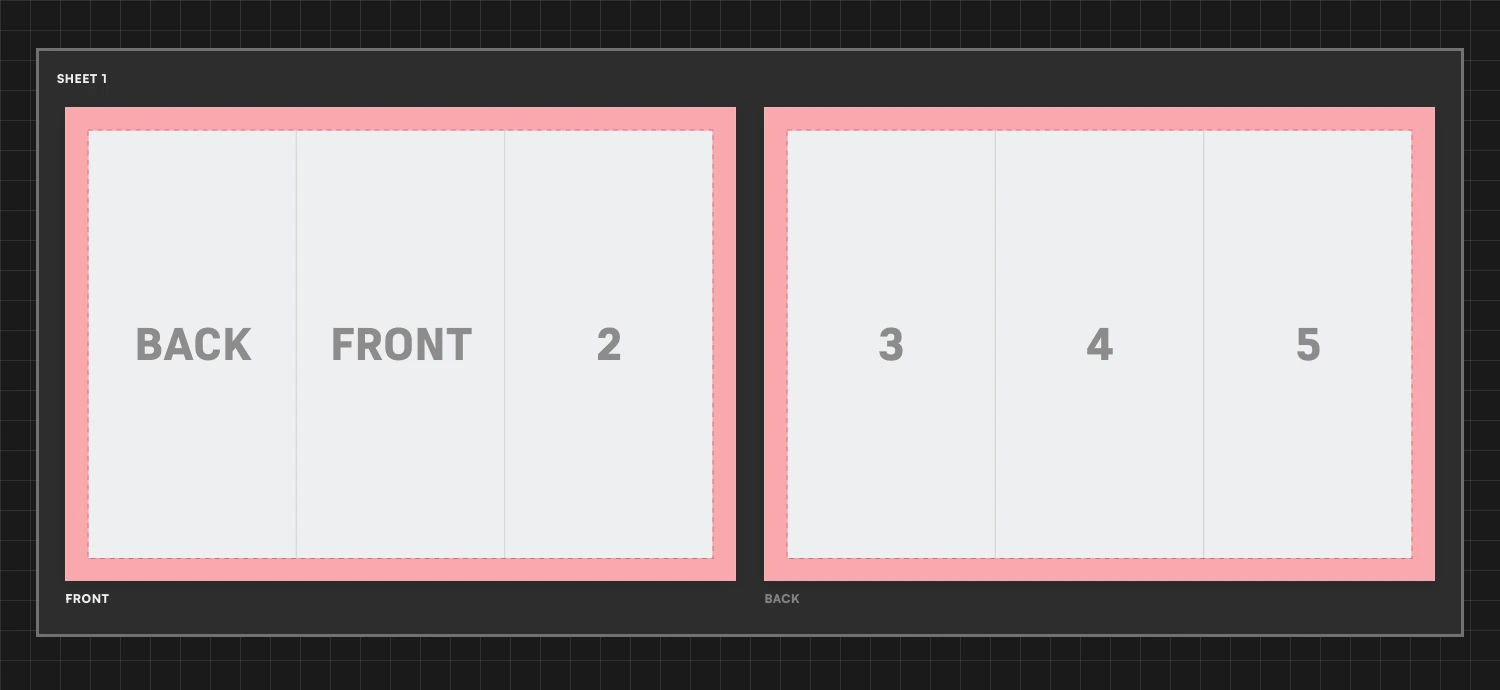
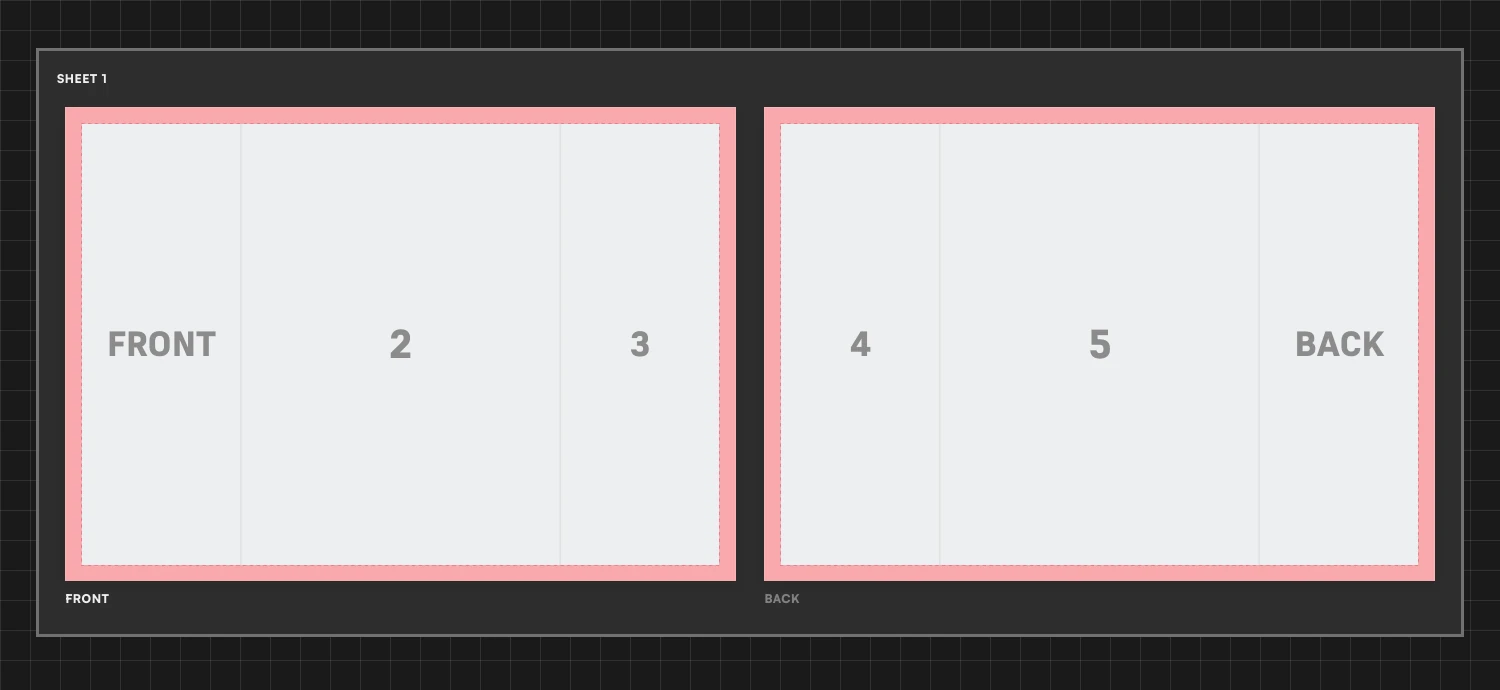
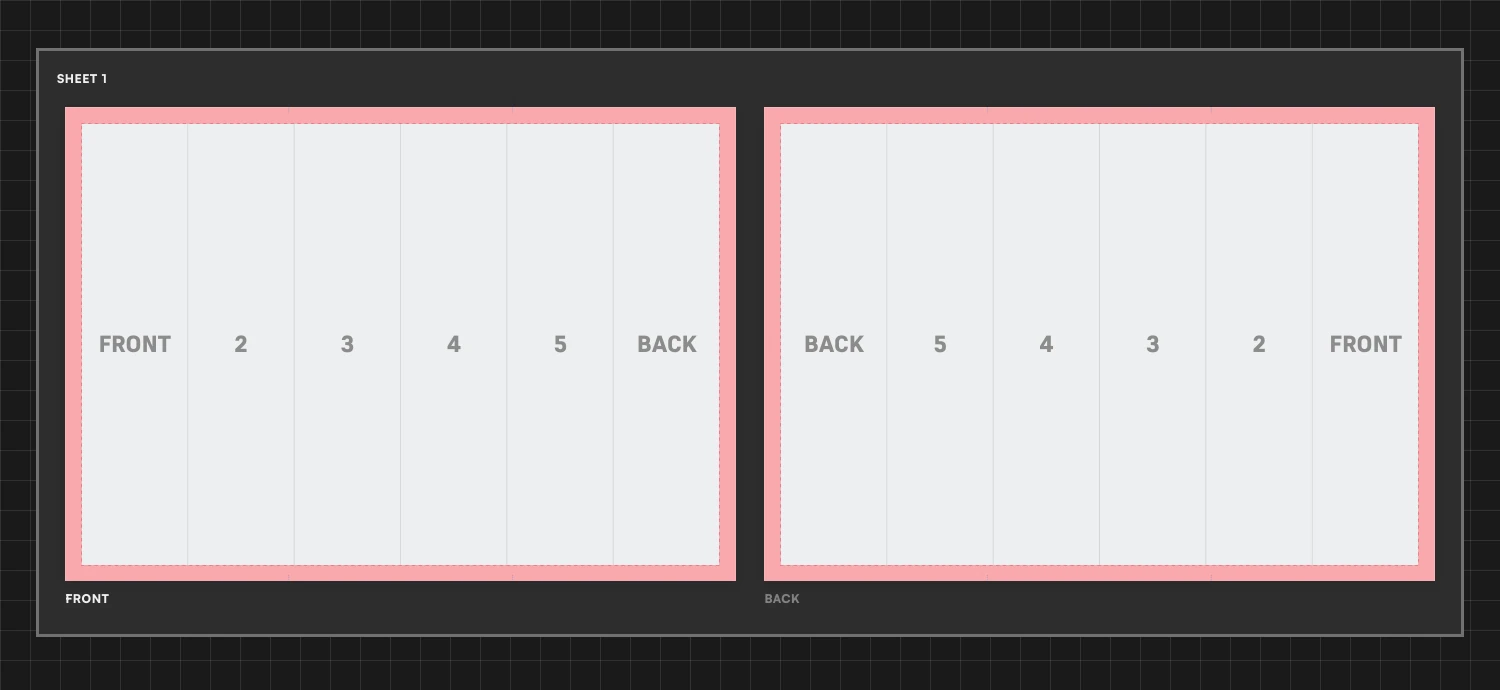
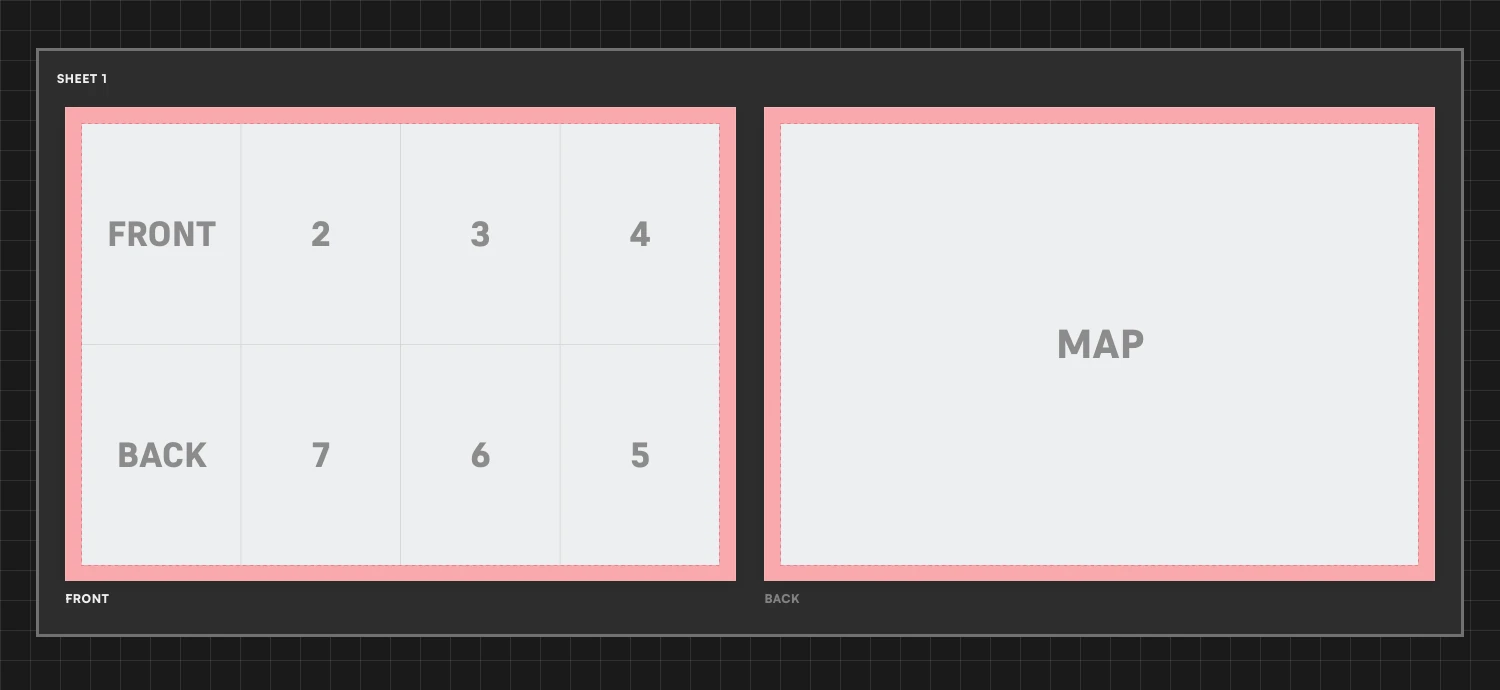
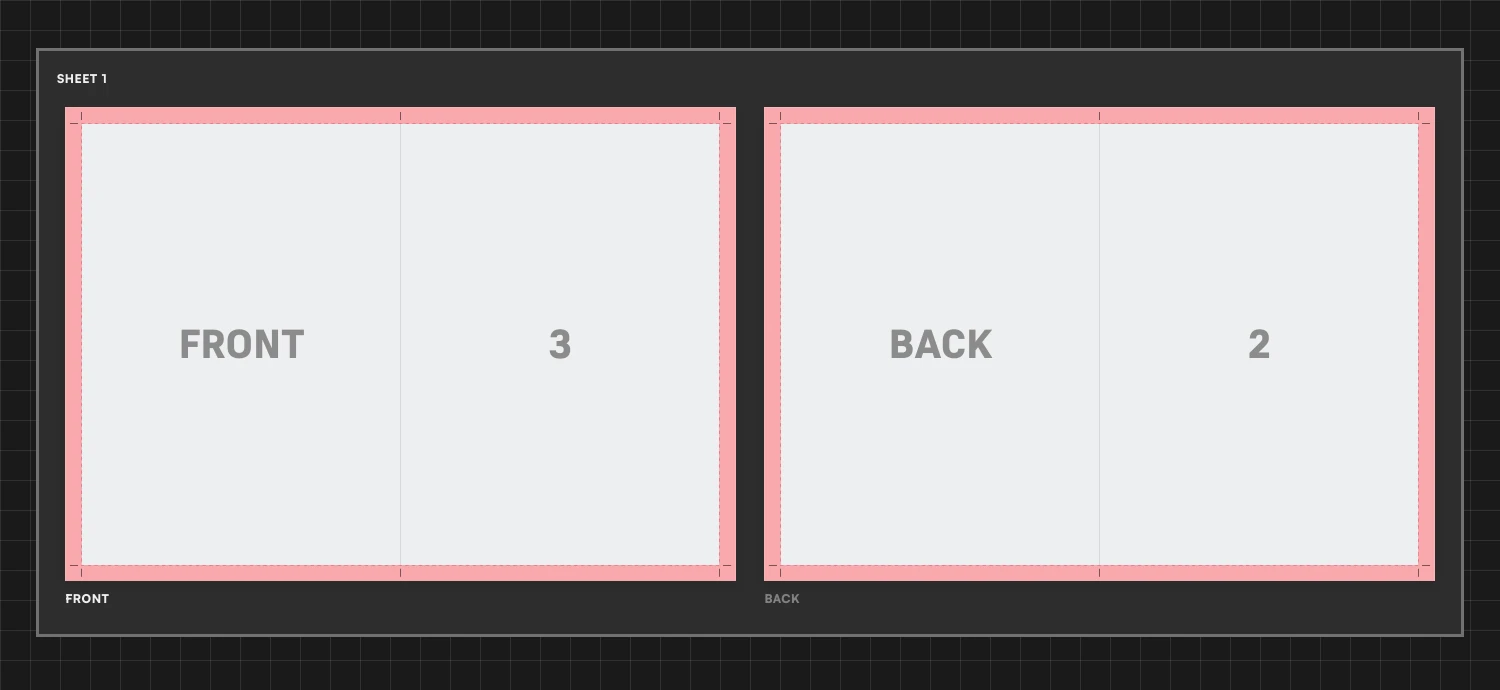
- Fold is one sheet that folds, with no cut and no staple: nine kinds of fold, from Half-Fold to Accordion. More in Folds.
- The covers show how it closes. On the Half-Fold, FRONT and BACK share a side: the outside, with pages 2 and 3 inside.
- A Map Fold prints its eight panels on the front only. At Details, Back offers None or Map: one area across the whole back, read unfolded.
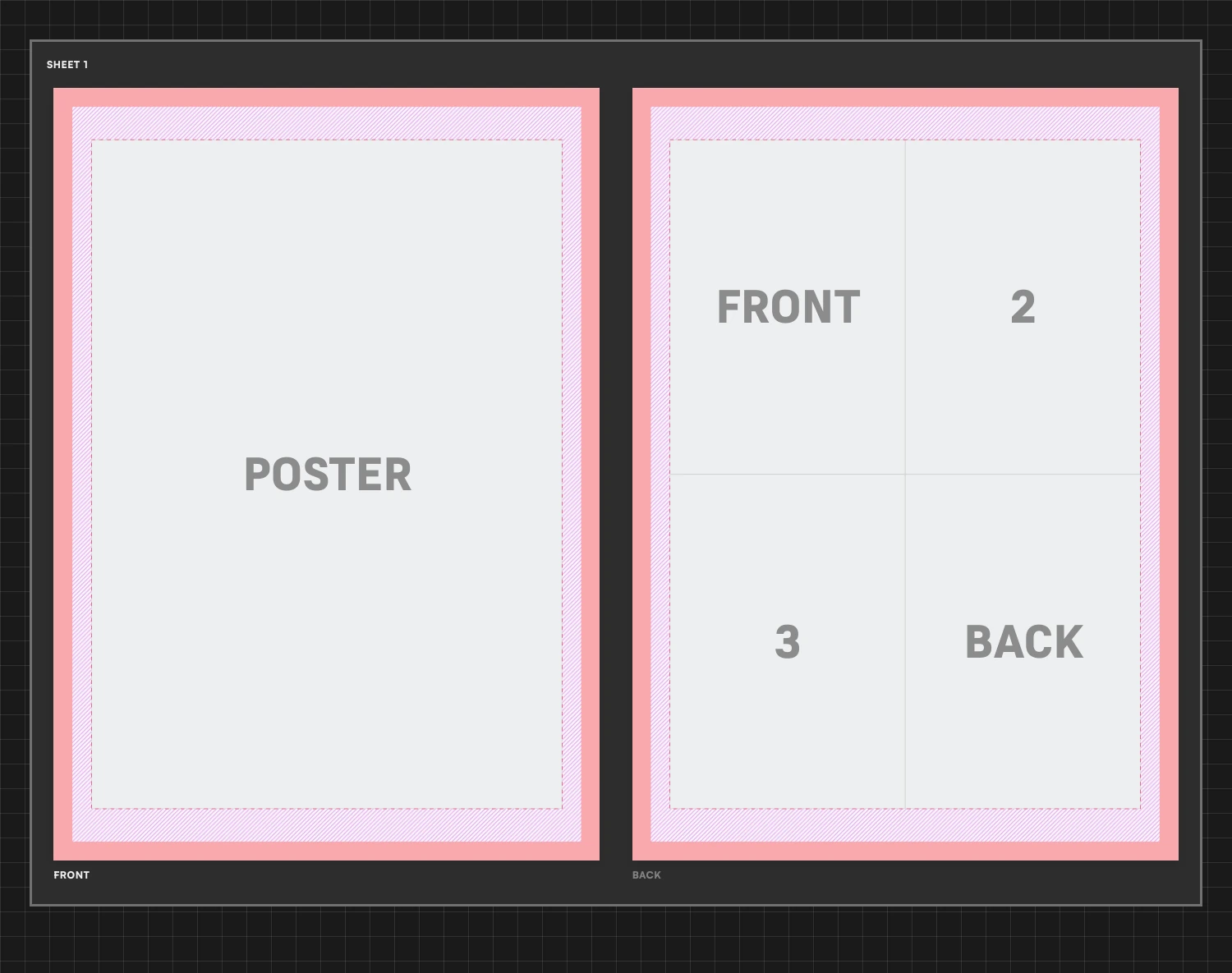
- Poster holds the Poster-Zines: POSTER takes the front, and the back is divided into 1 to 8 pages. Back format sets their size, here B6 (JIS); the hatched band is the Page Bleed left around them.
Perfect Bound, Stab and Fukuro-toji.
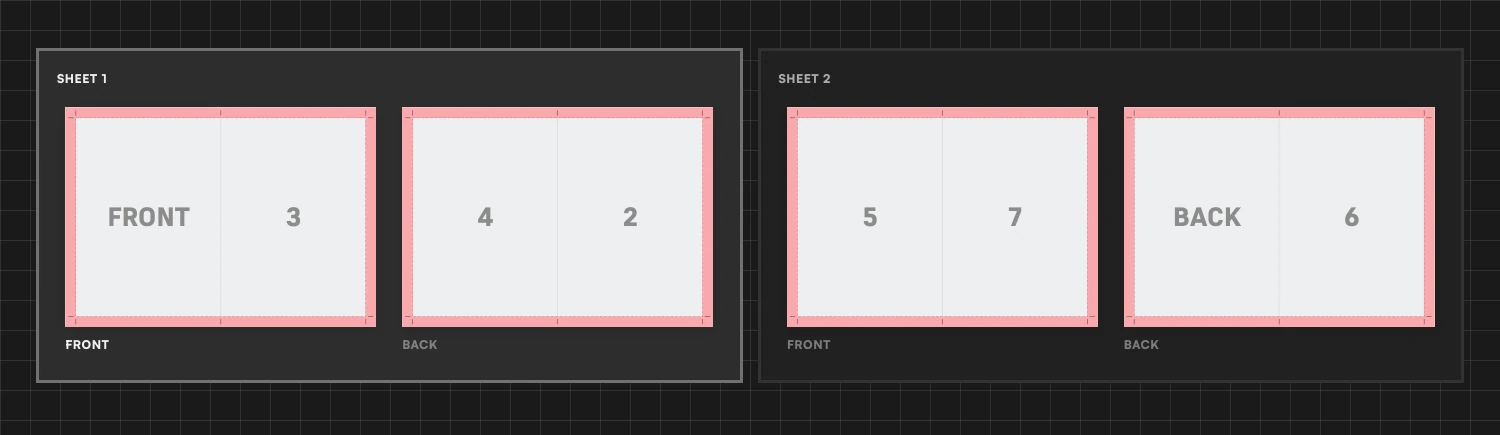
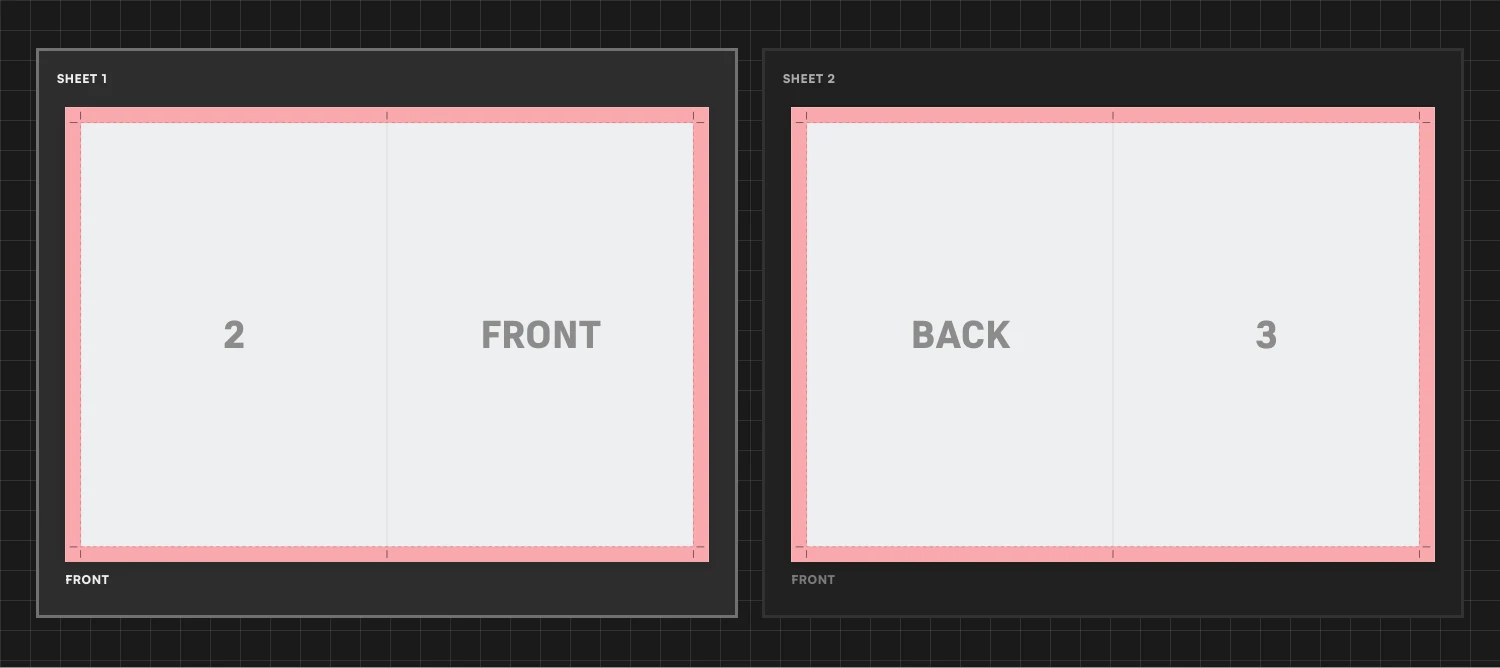
- Perfect Bound is the square, glued spine. On sheet 1, FRONT has page 2 behind it and page 3 has page 4: each half of a sheet is a leaf of the book.
- Stab is Japanese stab binding, sewn through the side. Its sheets are numbered the same way.
- Fukuro-toji is its folded version: each sheet is printed on one side, then folded in half. Nothing has to line up front to back.
Pick the card, then the sheet.
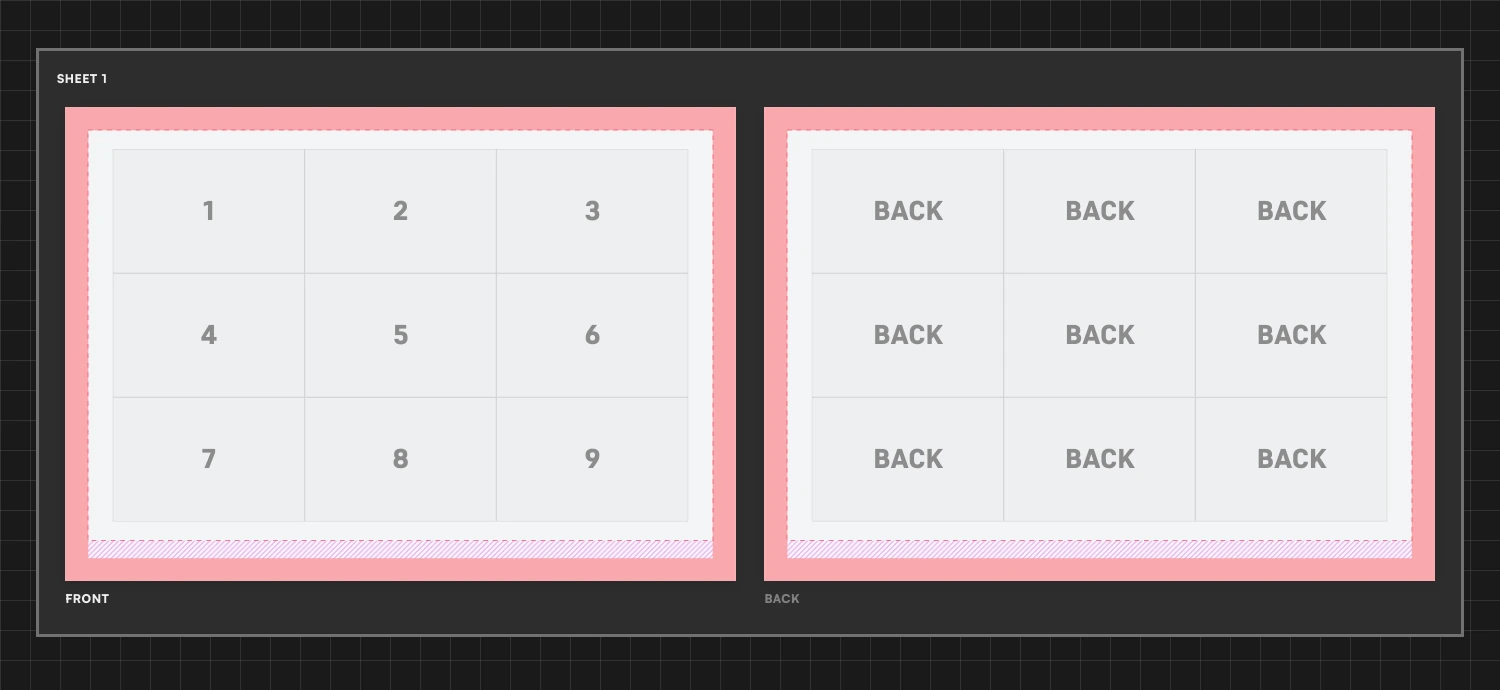
- Here Format lists ten card sizes; the sheet comes at Details, under Paper format.
- Shadrum turns the sheet the way that holds more cards: this A4 lies landscape, three by three.
- A card layout starts with its back: each slot there reads BACK. As on a Planche, one artwork dropped on a side fills all its cards. More in Business cards.
Start from the object.
- The same print several times on a sheet: Planche.
- Different prints sharing a sheet, each at its own size: Flat.
- A zine stapled in the fold: Booklet.
- Two stories in one zine, one from each cover: Head-to-Tail.
- A zine from one sheet, with no staple: Mini-Zine.
- A leaflet, a card, an accordion or a map: Fold.
- A poster that folds down to a small zine: Poster.
- A book with a spine: Perfect Bound. Sewn through the side: Stab, or Fukuro-toji to print one side only.
- Cards: Business Card.
| Family | Sheets | Pages | Sides |
|---|---|---|---|
| Planche | Sixteen, A6 to A2 and SRA2 | Slots | Front |
| Flat | The same sixteen | Slots | Front |
| Booklet | A4 to SRA2 | 4 to 64 (2-up), 8 to 64 (4-up) | Both |
| Head-to-Tail | A4 to SRA2 | 16 | Both |
| Mini-Zine | A4 to SRA2 | 8 or 16 | Front (8), both (16) |
| Fold | A4, A3, SRA3, A2, SRA2 | 3 to 12, set by the fold | Both; front for French Fold, Map Fold |
| Poster | A3, SRA3, A2, SRA2, Tabloid, B4 (JIS) | Poster and 1 to 8 pages | Both |
| Perfect Bound | A4 to SRA2 | Up to 96 or 128 | Both |
| Stab | A4 to SRA2 | 4 to 40 | Both |
| Fukuro-toji | A4 to SRA2 | 4 to 40 | Front |
| Business Card | A5 to SRA2 | Cards | Both |
Every printed side is one pass per ink. The eight-page booklet is 4 sides in 2-up and 2 in 4-up: with four inks, sixteen passes or eight. The one-sheet zine is a single side.